
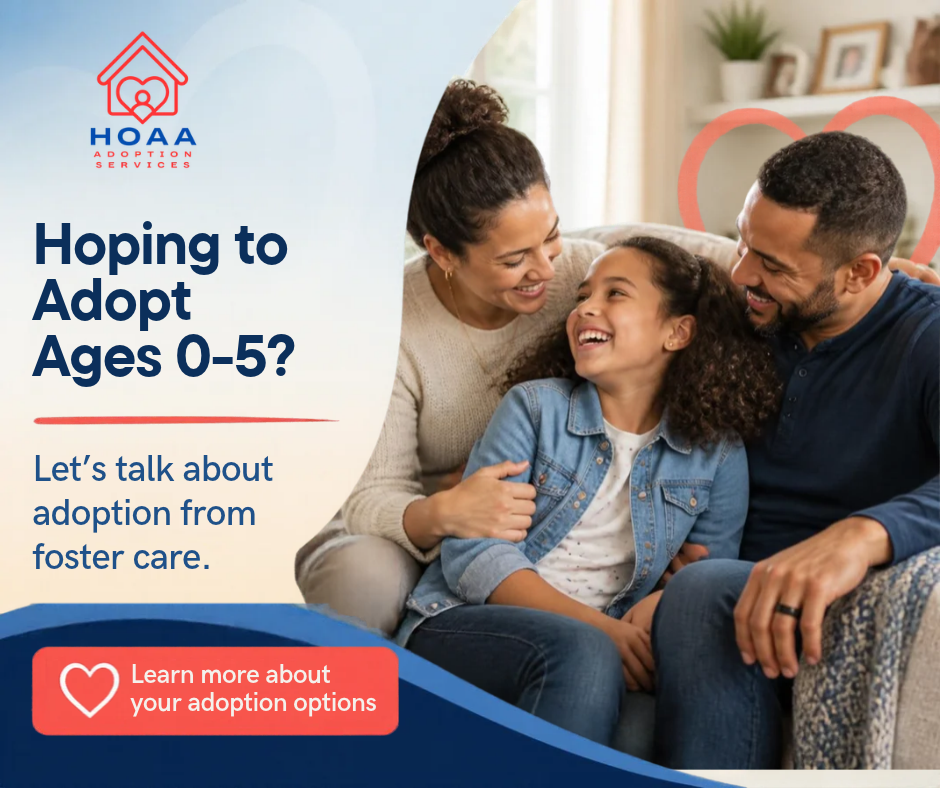
“I would love to adopt a child between birth and age five.”
At HOAA, we hear this often. Families picture bedtime stories, playground visits, learning through play, and the opportunity to build a close relationship during childhood’s early years.
Those hopes are understandable. We also encourage families to learn about the children waiting for adoption from foster care—including many who are age six and older. A child’s age tells you when they were born, but understanding who they are takes a much closer look.
Understanding Age and Development
Children develop at different rates. For some children who have experienced trauma, neglect, loss, or disrupted caregiving, their skills and needs may differ from what adults expect at their chronological age. Development can also be uneven: a child may have strong language skills while needing substantial help managing emotions or navigating friendships. Child Welfare Information Gateway encourages adoptive parents to consider a child’s developmental abilities when setting expectations and providing support.
For example, a school-age child may still need a parent’s close reassurance at bedtime, help calming down after disappointment, or patient guidance with everyday routines. These are opportunities to provide the nurturing, consistent care that many prospective parents hope to offer.
This does not mean every child in foster care has developmental delays, or that an older child should be treated as a preschooler. Each child has individual strengths, interests, experiences, and needs. Their chronological age, identity, and growing independence deserve respect alongside any additional support they require.
There Is Still So Much Childhood to Share
Adopting a child age six or older can include many of the experiences families imagine when they first consider adoption: reading together, making pancakes, playing games, exploring a park, and creating comforting bedtime routines.
There will also be discoveries unique to your relationship. You may learn which book makes your child laugh, what helps them feel safe, or how they like to celebrate an accomplishment. Over time, ordinary moments can become meaningful family traditions.
Children joining a family bring their own histories, relationships, and memories. Parenting includes making room for those connections while building new ones together.
Consider What Draws You to Parenting a Younger Child
If your initial preference is birth through age five, consider what matters most about that age range.
Is it the chance to nurture? To play? To guide a child as they learn new skills? To offer comfort, consistency, and encouragement?
A child age six, eight, or older may need those same qualities in a parent. Being open to learning about older children can help you discover whether your strengths align with needs you had not previously considered.
That openness should come with honest preparation. Developmental differences do not necessarily make parenting easier or mean that a child will quickly “catch up.” Families need to understand the individual child’s needs, consider their own capacity, and be ready to seek appropriate services and ongoing support.
Let the Conversation Begin With Possibility
At HOAA, our work centers on identifying children whose needs a family is prepared to meet. Through education, home study services, and child search and support, we help families explore what that commitment could look like.
If you have been considering adopting a child age zero to five, we invite you to learn more about children age six and older who are waiting for permanent families. You do not need to have every answer before starting the conversation.
Visit adopthoaa.org to connect with our team and explore adoption from foster care. There is still so much childhood—and so much connection—to share.